




Exhibits
Production decision support system with digital twins solution for bicycle industry (PDSS)
Contact Supplier
Institute for Information Industry (III)
+886-2-66318168
Company's Brief Introduction
Institute for Information Industry (“III”) was established on July 24, 1979.It is a non-governmental organization (NPO, Nonprofit Organization) through the joint efforts of public and private sectors. III was established so as to “promote effective application of information technology, increase national comprehensive competitiveness, create preconditions and environment for information industry to develop, and to strengthen the competitiveness of information industry.”
In recent years, following the rapid changes in the global environment, III has modified its objectives and missions to promote information communication technology innovation and applications in Taiwan, and to assist in the development of the digital economy.
Product Name
Production decision support system with digital twins solution for bicycle industry (PDSS)
Features of Product
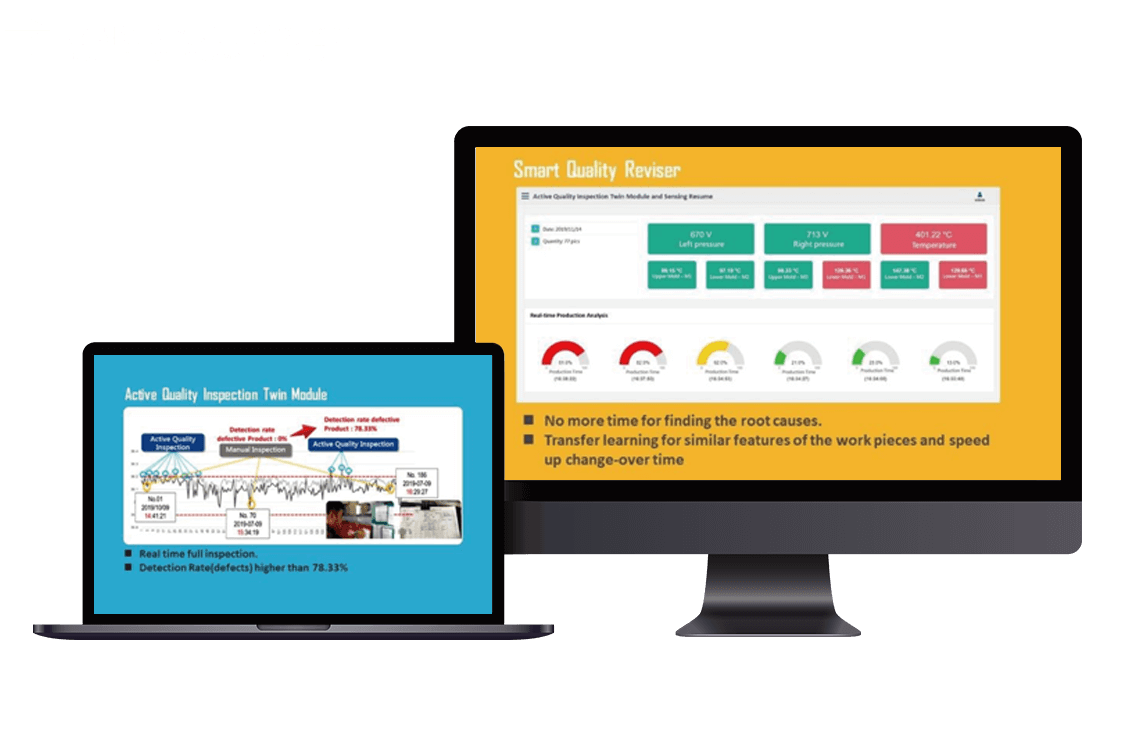
The Production Decision Support System (PDSS) with Digital Twins Solution for Bicycle Industry is a quality inspection system for Taiwan’s bicycle industry in improving production quality, reducing costs, and quick adjusting production lines to succeed in global market. The solution can become a great model of digital twin on smart manufacturing. Driven by a digital twin quality decision support system, it is slated to help Taiwan return to its bicycle A-team glory days and push forward the development of the bicycle industry. This solution narrows the three gaps in the bicycle industry: information, equipment and process. Small and medium-sized enterprises (SMEs) have limited capital, resulting in the inability to digitize the production line due to outdated equipment and know-hows. Frequent line-changeovers to cater to market needs subsequently lead to lagging order fulfillment and high scrap rate. To narrow the three gaps, this solution (1) links different machines, allows data visualization, and enables smart manufacturing without having to replace existing equipment and production processes; (2) adopts aggressive quality control in place of passive manual sampling; and (3) uses the digital twin prediction model to reduce the implementation cost and time by a large margin, which significantly improves the production efficiency and reduces the defect rate to successfully transform the bicycle industry.